
THE EU’S TWENTY-FIRST SANCTIONS PACKAGE: HOW INDIVIDUAL COUNTRIES ARE WEAKENING THE MEASURES
Updated: Aug 14
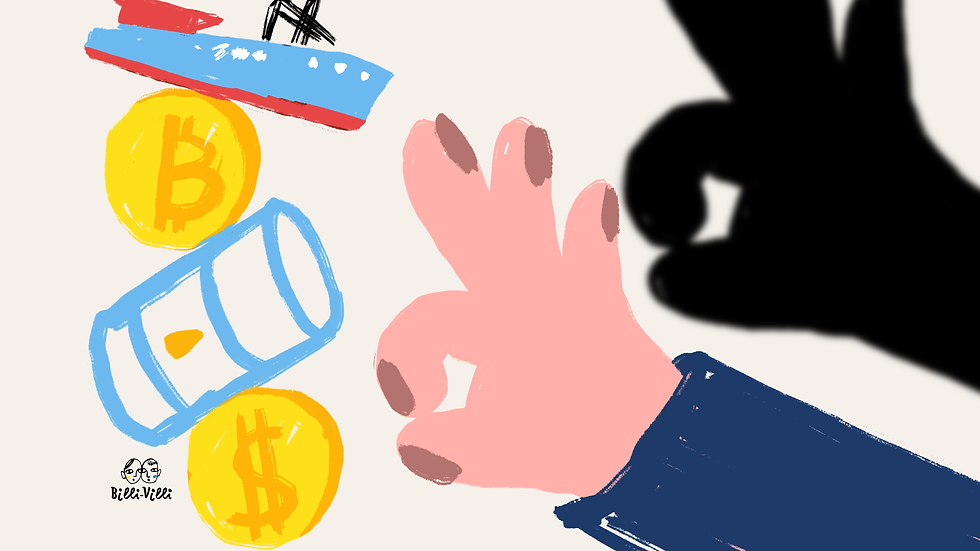
What restrictions does the 21st sanctions package impose on Russia?
The EU's 21st sanctions package against Russia became the second such list approved by the Council of the EU this year. The package covers increased pressure on:
the banking and cryptocurrency sector;
Russia's energy revenues, including the establishment of a price cap on oil;
the 'shadow fleet' and oil refining;
the military-industrial complex and drone manufacturers.
It also provides for an expansion of export controls on dual-use goods and the creation of a legal basis for a visa ban on Russian combatants.
Immediately after the 20th package was approved in April, Ursula von der Leyen announced the preparation of a further sanctions list against Russia, hoping to introduce it in early summer. The rapid pace of action by EU officials was driven by several factors.
The first was Viktor Orbán’s defeat in the Hungarian parliamentary elections. For a long time, the Hungarian prime minister had been the main obstacle to the adoption of sanctions packages, exploiting the unanimity mechanism to his own advantage. With Péter Magyar’s victory, the EU expected Hungary’s position on the bloc’s common foreign policy to shift in a more constructive direction, and with Orbán gone, his consistent blocking of new sanctions against Russia was expected to go with him.
The second factor was the increasingly visible economic exhaustion of Russia. From the start of the second quarter, the weakening of Russia’s position became apparent to the vast majority of European politicians. The dynamics of the Russo-Ukrainian war began to shift in Ukraine’s favour for the first time in a long while. Against this backdrop, intensifying sanctions pressure was driven in part by the aim of compelling Russia to come to the negotiating table.
Although the package itself contains many new restrictions, two elements stand out as the most important - those the European Commission was most determined to include.
The first was freezing the oil price cap at its existing level of $44.10 per barrel rather than allowing it to be automatically revised upwards.
The second was prohibiting European shipping companies from transporting Russian liquefied natural gas.
The automatic price cap adjustment mechanism at EU sanctions level was introduced by the 18th package almost a year ago. Until then, such measures had been taken exclusively within the G7 framework through the joint action of its members. However, following Donald Trump’s return to power, the American administration declined to continue the price cap policy. From 2025, the European Union, in coordination with partners such as Canada and the United Kingdom, decided to implement this mechanism independently.
The price cap was calculated using the following formula: the average price of Russian oil over a defined period, approximately the previous six months, was taken and 15% was deducted. The resulting per-barrel figure became the maximum permitted price for purchasing crude oil exported by sea from Russia, provided that the purchase involves maritime, financial, or other services from any organisation based in the EU and partner countries. When the mechanism worked within the G7 framework, the restrictions applied to services from organisations in G7 countries and their partners.
Throughout the previous year, oil prices fell, bringing the cap down to $44.10 per barrel at the start of this year. The war waged by Israel and the United States against Iran caused a sharp and sustained rise in prices. By the EU’s own logic, the cap should have been revised upwards, but doing so would have significantly weakened pressure on Russia’s energy sector and economy. The 21st package therefore froze the automatic adjustment mechanism and maintained the existing limit at sanctions level, in order to deny Moscow the additional opportunity to benefit from the global energy market crisis.
Freezing the price cap at sanctions level met no serious opposition among the bloc’s member states. The same cannot be said of the second most important element of the package, the maritime transport of LNG.
Almost immediately after the proposal was put forward, Greece began actively blocking the decision. The sticking point was the economic interests of Greece’s traditionally influential shipping industry. Eleven of the twenty-seven vessels belonging to the Greek company Dynagas, which specialises in LNG transport, have commitments to transport Russian gas. The vessels are chartered to deliver liquefied gas from the Yamal LNG project, Russia’s most important LNG facility, under long-term contracts running until 2031–2035.
Five of the company’s tankers belong to the special Arc7 class, which allows them to operate in conditions where the water surface is covered by deep ice. Due to the climatic conditions of Russia’s far north, only this type of tanker can transport LNG from Yamal during the winter and spring. In total, there are 15 Arc7 tankers serving Yamal meaning that Greek Dynagas alone provides a third of this capacity.
Strong demand and access to the European market means that Russia’s LNG sector remains highly profitable. In the first half of this year, European countries paid approximately €6 billion for liquefied gas from the Yamal LNG project, with 97% of its exports going to EU ports.
From the start of next year, imports of Russian LNG into the European Union will be prohibited. Russia will therefore attempt to redirect its LNG exports to new markets, something that is considerably easier to achieve than with pipeline natural gas.
To complicate this process in advance, the EU proposed prohibiting shipping companies from transporting Russian LNG to third countries. For Dynagas, however, this would mean losing a significant share of its profits and so the company, acting through the Greek government, ultimately secured a one-year deferral of the measures. Greece thus demonstrated an example of effective sanctions blocking.
Which other countries were blocking adoption of the sanctions package?
Despite Orbán’s absence, EU member states continue to lack consensus on a unified sanctions policy. During discussions on the 21st package this was further demonstrated by Italy and Bulgaria’s positions on personal sanctions against Russian Orthodox Church Patriarch Kirill, and by the Bulgarian government’s position on imposing restrictions on Lukoil president Vagit Alekperov. Italy and France together slowed the process of introducing an EU visa ban for those complicit in Russian aggression.
Austria, meanwhile, demanded the lifting of EU sanctions on assets linked to Russian billionaire Oleg Deripaska, arguing that this was necessary to allow the Austrian bank Raiffeisen to pay the oligarch compensation following a Russian court ruling. Unlike Greece and Bulgaria, however, Austria failed to secure significant concessions on this point, given the broader sensitivity of the question of unfreezing Russian assets on EU territory.
What does the position of European countries on anti-Russian sanctions indicate?
The adoption of the 21st sanctions package illustrates how the ambitions of EU institutions have collided with the positions of individual member states, where a veto from one capital can block the entire package.
For a long time, the behaviour of the former Hungarian prime minister, sometimes joined by Robert Fico, allowed the internal disagreements among European states on sanctions policy to remain hidden. Now it is clear that a threat to the business interests of a single country is sufficient grounds for blocking an entire package, even when that country’s government - in this case Greece’s - takes a consistently pro-Ukrainian position.
Billi-Villi is an analytical media outlet that explains the mechanics of decision-making, the motivations of politicians, hidden interests, and the consequences that are already shaping the situation in the world and in Ukraine today.

Comments