
THE US IS 'DISMANTLING' THE INTERNATIONAL CRIMINAL COURT. WHAT DOES THIS MEAN FOR UKRAINE?

When was the ICC created, by whom, and for what purpose?
The International Criminal Court emerged as an institutional response to the mass crimes of the twentieth century. The Nuremberg and Tokyo tribunals established the principle of individual criminal responsibility for international crimes, but they were temporary bodies of the Second World War's victorious powers. On 9 December 1948, the UN General Assembly tasked the International Law Commission with studying the feasibility of creating a permanent international judicial body for genocide cases, but draft statutes in 1951 and 1953 were shelved pending agreement on a definition of aggression, and the Cold War put the idea on hold indefinitely. In 1989, Trinidad and Tobago revived it, primarily in connection with cross-border drug trafficking. In parallel, the UN Security Council established ad hoc tribunals for the former Yugoslavia in 1993 and Rwanda in 1994. These proved that international justice was achievable, while also revealing the limitations of mandates tied to specific situations, and helped shape the convening of the Rome Conference. The conference adopted the Rome Statute, the foundational document that brought the International Criminal Court into being, with 120 states voting in favour, 7 against, and 21 abstaining. The Statute entered into force on 1 July 2002 following ratification by participating states, though not all who voted for it at the conference chose to ratify it. 125 countries have now formally joined the Rome Statute, but the United States, China, India, Israel, Russia, and several others do not recognise its jurisdiction.
Unlike the tribunals of the twentieth century, the ICC is a permanent judicial institution established by international treaty and institutionally independent of the UN, though the Security Council can defer investigations and prosecutions. Unlike the International Court of Justice, it judges individuals rather than states. Its subject-matter jurisdiction covers genocide, crimes against humanity, war crimes, and the crime of aggression, and its temporal jurisdiction is limited to crimes committed after 1 July 2002. Statutes of limitations do not apply and no official position, including head of state, confers immunity. The Statute's preamble defines the Court's purpose as putting an end to impunity for the most serious crimes of concern to the international community and thereby contributing to their prevention, while placing on every state the duty to exercise criminal jurisdiction over those responsible for international crimes.
Jurisdiction rests on state consent. The Court considers crimes committed on the territory of, or by nationals of, signatory states or states that have accepted its jurisdiction by declaration. Without such consent, the Court acts only in cases referred by the UN Security Council. Investigations are initiated by a signatory state, the Security Council, or the Prosecutor with authorisation from the Pre-Trial Chamber. A case may proceed only where national authorities are inactive, or unwilling or unable to genuinely investigate and prosecute. The Court has no police force of its own, so the execution of arrest warrants depends entirely on the cooperation of states.
What has the US position been on the Court's creation and work?
The United States voted against creating the ICC at the Rome Conference and insisted that the Rome Statute not be adopted by consensus of the majority of participants. Bill Clinton nonetheless signed it on 31 December 2000, but deliberately did not submit it to the Senate for ratification. The George W. Bush administration went further. In August 2002, the American Servicemembers' Protection Act (ASPA) entered into force, prohibiting cooperation with the Court and authorising the president to use "all necessary means" to free any Americans detained in The Hague. It therefore became known as the 'Hague Invasion Act.'
The situation eased somewhat under Obama. In November 2009, a US representative attended the Assembly of States Parties for the first time, as an observer. Donald Trump's first presidency, however, returned the relationship to confrontation. This was initially at the rhetorical level, as National Security Advisor John Bolton declared the Court "already dead to us," and two weeks later Trump himself, speaking from the UN General Assembly podium, firmly rejected the "ideology of globalism" and its manifestation in the ICC. Action followed, with the trigger being the so-called 'Afghanistan dossier' concerning the conduct of US military personnel and intelligence officers in Afghanistan. In April 2019, the US revoked the visa of Prosecutor Fatou Bensouda, and when the Appeals Chamber authorised an investigation on 5 March 2020 covering alleged torture by the military and CIA in Afghanistan and on the territory of Poland, Romania, and Lithuania, sanctions were imposed on her by presidential decree. Under Biden, however, they were lifted. The Biden administration and Democrats generally took a neutral-to-positive approach to the ICC, avoiding confrontation, though Biden and members of his government condemned the arrest warrant for Netanyahu during Trump's second term.
Trump's return made sanctions systematic. A presidential decree of 6 February 2025 declared the Court's actions a national emergency, citing directly the arrest warrants issued on 21 November 2024 for Benjamin Netanyahu and Yoav Gallant. Sanctions were imposed on then-Prosecutor Karim Khan, four judges in June, and four further officials in August 2025. The Netanyahu warrant appears to have been a personal trigger for Trump, who publicly criticised the ICC's actions on multiple occasions. In January 2025, Republicans in the House of Representatives, with the support of some Democrats, voted for sanctions against ICC representatives involved in investigations against American citizens and citizens of US allied countries, citing the case against Netanyahu and Gallant. Senate Democrats blocked the bill, with Senate Democratic Leader Chuck Schumer calling such measures against the ICC unacceptable and pointing among other things to the Court's investigation of Russia's crimes against Ukraine.
The administration's motivation extends beyond any single case. Secretary of State Marco Rubio described the ICC as "a global tribunal staffed by unelected globalist bureaucrats who claimed their power is almost unlimited," framing the issue as a threat to US sovereignty. This reflects the same paradigm as the earlier decrees on withdrawing from the UN Human Rights Council and reviewing participation in UNESCO, though applied more aggressively. It is a rejection of the right of a supranational body to judge citizens of a state that never recognised its jurisdiction, rather than one specific ruling. The Republican disdain for supranational institutions combines here with appeals to sovereignty and national security. This is particularly evident in Rubio's argument that a cornerstone of American statehood is the right of American citizens to be judged for criminal offences by a jury of their own peers.
The ideological foundation for the administration's actions is matched by practical grievances. Among those sanctioned in August 2025 was Judge Kimberly Prost, and the State Department specifically cited her decision to authorise the investigation into American personnel in Afghanistan. A further grievance concerns strikes on 'drug boats' that claimed more than two hundred lives. The Statute gives the Court jurisdiction over crimes committed aboard vessels registered in states parties, including Colombia, Ecuador, and Venezuela. Pentagon chief Pete Hegseth warned that the ICC might pursue these strikes and urged Latin American countries to withdraw from the Rome Statute.
It is more accurate to note that the foreign policy pursued by Republican presidents in the twenty-first century is closely connected to their disregard for international law. For Republicans, sovereignty and national interests come first. Government action must conform to national law, while relations with other states are conducted in the framework of political realism, according to which constraints are acceptable only when motivated by self-interest. The current Trump administration pursues an aggressive foreign policy under the banner of protecting national interests and 'America First.'
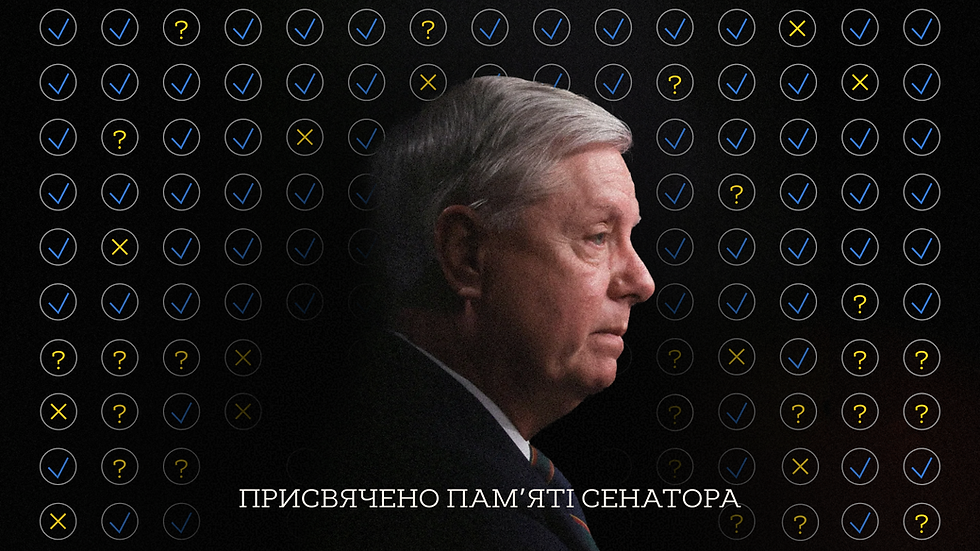
The proceedings against senior Israeli officials clearly fed fears that the ICC might take similar action in the future against American officials and senior military figures. As the late Senator Lindsey Graham put it: “This court is for Africa and thugs like Putin. It is not for democracies like Israel and the United States.” At the same time, when it comes to those Republicans consider terrorists and threats to US national security, they use their own laws as the legal basis and their own security agencies as the enforcement arm. This is visible in the case of Venezuelan leader Nicolás Maduro, who was first designated a member of the terrorist organisation 'Cartel of the Suns,' then seized in an armed raid on Caracas and brought before a court in New York, where he is being tried under American law rather than international law.
What role have the US played in ICC proceedings concerning Russian crimes in the war against Ukraine?
Ukraine ratified the Rome Statute in 2024, almost simultaneously with the Court issuing warrants for Netanyahu and Gallant and the US launching its aggressive campaign against the ICC. In the case of Russian crimes against Ukraine, American officials had cooperated with the Court, sharing evidence of Russian unlawful conduct. Some Republicans also supported this, including the aforementioned Senator Lindsey Graham.
Even before Biden decided to share evidence of Russian war crimes in Ukraine with the ICC, American legislators took a fairly decisive step and amended legislation to open the door for US authorities to cooperate with the Court. Specifically, Congress expanded the Obama-era 'Dodd Amendment' to ASPA which had created a legal loophole for US assistance to "international efforts to bring to justice Saddam Hussein, Slobodan Milosovic, Osama bin Laden, other members of Al Queda, leaders of Islamic Jihad, and other foreign nationals accused of genocide, war crimes or crimes against humanity." The additional amendment stated that ASPA's provisions should not impede "rendering assistance to the International Criminal Court to assist with investigations and prosecutions of foreign nationals related to the Situation in Ukraine, including to support victims and witnesses." Other legislative steps taken by Congress helped establish a foundation for cooperation between US authorities and the ICC. By early 2024, therefore, the United States had deliberately and systematically committed to helping Ukraine investigate Russian war crimes and was cooperating with the Court. This reflected both the Democrats in power with their positive attitude towards the principles of international law, and the robust bipartisan support for Ukraine.
What are the consequences for Ukraine of the US-ICC escalation?
The escalation between the current American administration and the ICC has several consequences for Ukraine. First, any prospect of renewed American support for holding Russia to account through the Court is definitively lost. Second, the ICC's work itself is complicated by American sanctions, including proceedings relating to Russian war crimes. Third, attacks by a global superpower such as the United States undermine the Court's authority. Since early 2022, the threat of arrest under an ICC warrant has on at least two occasions deterred Putin from attending BRICS summits: in 2023 in South Africa and in 2025 in Brazil, both countries that have ratified the Rome Statute. Fourth, the system of international law and accountability for international war criminals is eroding, with the Americans openly demonstrating their intention to 'dismantle' the part of it represented by the ICC. Fifth, tensions between the United States and European countries are deepening. In Europe, where the Court is based, international law continues to be regarded as an indispensable component of a just world order, and the fundamental divergence with the United States on this question becomes yet another source of friction in the relationship.
The approaches of the United States and Ukraine to engagement with the ICC are now fundamentally different. Ukraine operates on the assumption that the only realistic and morally justified path to holding Russia's leadership accountable and establishing justice runs through the assistance of others, namely the Court and its member states. The United States, by contrast, relies on its own means. For Republicans, the ICC represents not only a dimension of the 'liberal' world order they reject, but a direct obstacle to the pursuit of justice as they define it.
Billi-Villi is an analytical media outlet that explains the mechanics of decisions, the motivations of politicians, hidden interests, and consequences affecting the situation in the world and in Ukraine today.


Comments